How Time Zone Differences Shape Bonus Claims in Global Poker Tournaments and Cross-Border Athletic Markets on Mobile Apps
Rosa Lang · Nov 6, 2026

How Time Zone Differences Shape Bonus Claims in Global Poker Tournaments and Cross-Border Athletic Markets on Mobile Apps
Time zone variations create distinct patterns in how players access and redeem bonuses across international poker events and mobile sports markets, because operators set expiration windows according to their server locations while participants join from distant regions and this mismatch often determines whether a promotional offer converts into actual playtime or expires unused.
Poker Tournament Schedules and Bonus Timing
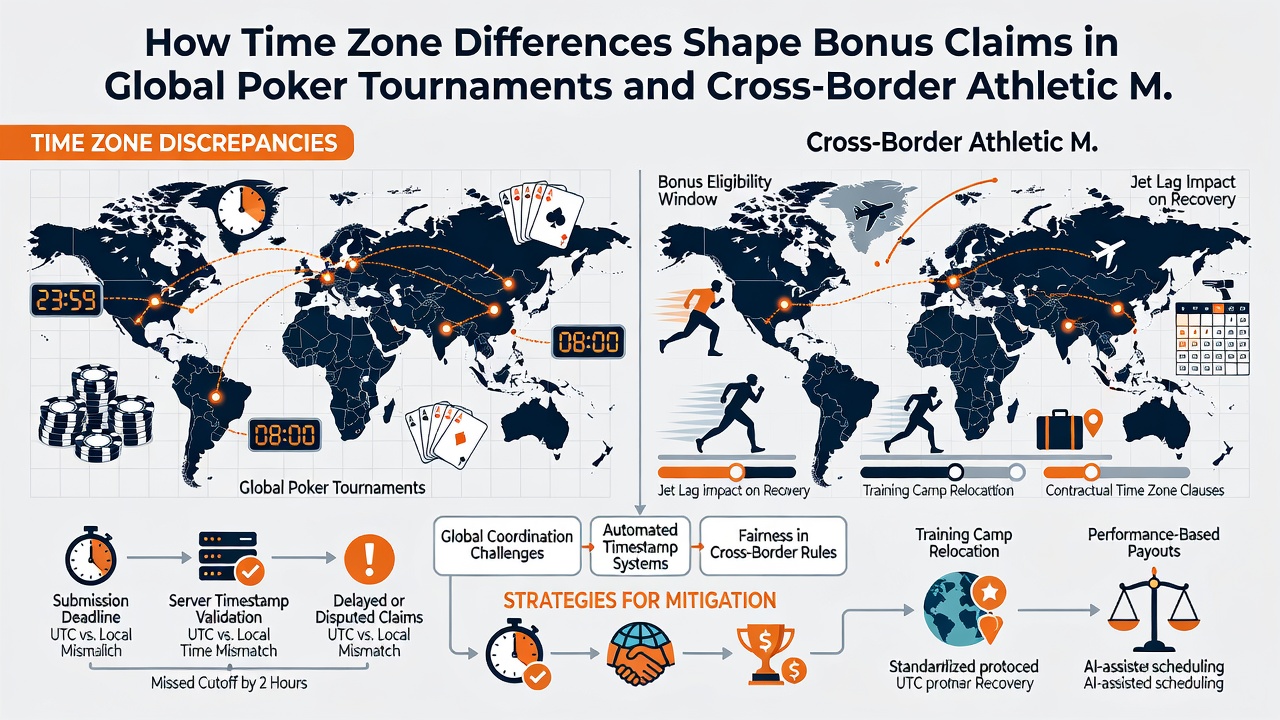
Global poker platforms run multiple daily tournaments that span continents, yet bonus codes tied to entry fees or leaderboard prizes frequently reference a single headquarters clock, so a player in Asia Pacific might receive a 24-hour redemption window that ends before their local morning while a European counterpart completes the same task with hours remaining, and data from industry reports shows these offsets reduce claim rates by measurable percentages during events that cross the International Date Line.
Observers note that major series in November 2026 scheduled key final tables to accommodate North American prime time, which shifted bonus activation windows forward for Asian participants and forced many to adjust sleep cycles or risk forfeiting rewards that required real-time verification steps within the app.
Cross-Border Athletic Markets on Mobile Platforms
Mobile apps offering in-play wagers on soccer, basketball and tennis draw users from multiple continents simultaneously, and time zone gaps influence bonus eligibility when promotions activate only during specific match windows set by European or American operators, whereas Australian or South American bettors encounter different availability because their local clocks place those windows outside standard bonus periods and this pattern appears consistently in transaction logs analyzed by research groups.
One documented case involved a November 2026 tennis grand slam where promotional credits for live betting expired at midnight Eastern Time, leaving participants in Western Australia with only a narrow evening slot to complete qualifying wagers before the window closed.
Technical Adjustments in App Design
Developers respond to these discrepancies by embedding automatic time zone detection and countdown displays that convert server time into the user's local setting, yet the underlying bonus rules still tie redemption deadlines to the operator's chosen zone, which means users must manually account for offsets when planning participation in overlapping poker hands and athletic events on the same device.
According to findings published by the University of Sydney's gambling research unit, platforms that display dual timers see higher completion rates for cross-border claims because players receive clearer visibility into remaining windows without needing external conversion tools.
Regulatory Perspectives Across Regions
Agencies such as the Australian Communications and Media Authority track how time-based promotions affect user behavior in digital markets, and their reports indicate that operators increasingly provide region-specific bonus schedules to reduce friction for international audiences, although core expiration mechanics remain anchored to a single reference clock in most systems.
Canadian regulatory summaries further highlight that players accessing U.S.-based athletic markets encounter similar offsets during major league seasons, with bonus claims peaking during overlapping evening windows that align better with Eastern Time zones than with Pacific or Atlantic regions.
Practical Examples from Recent Events
Take one November 2026 poker festival that ran simultaneous satellites across three continents, where bonus chips for early registration carried 48-hour validity periods measured from server midnight, and participants in Tokyo needed to act within their afternoon hours while those in New York had until late evening, producing distinct claim clusters visible in platform analytics.
Similar dynamics appeared in mobile soccer betting during the same month, when European Champions League matches triggered location-specific bonuses that expired before kickoff for some Asian users but aligned perfectly for others, illustrating how the same promotional structure yields different outcomes depending on geographic placement relative to the operator's clock.
Conclusion
Time zone differences continue to influence bonus claim patterns in both poker tournaments and cross-border athletic markets because fixed expiration rules interact with global participation schedules, and platforms that incorporate clearer local-time displays along with flexible regional adjustments demonstrate measurable improvements in redemption consistency across user bases.